

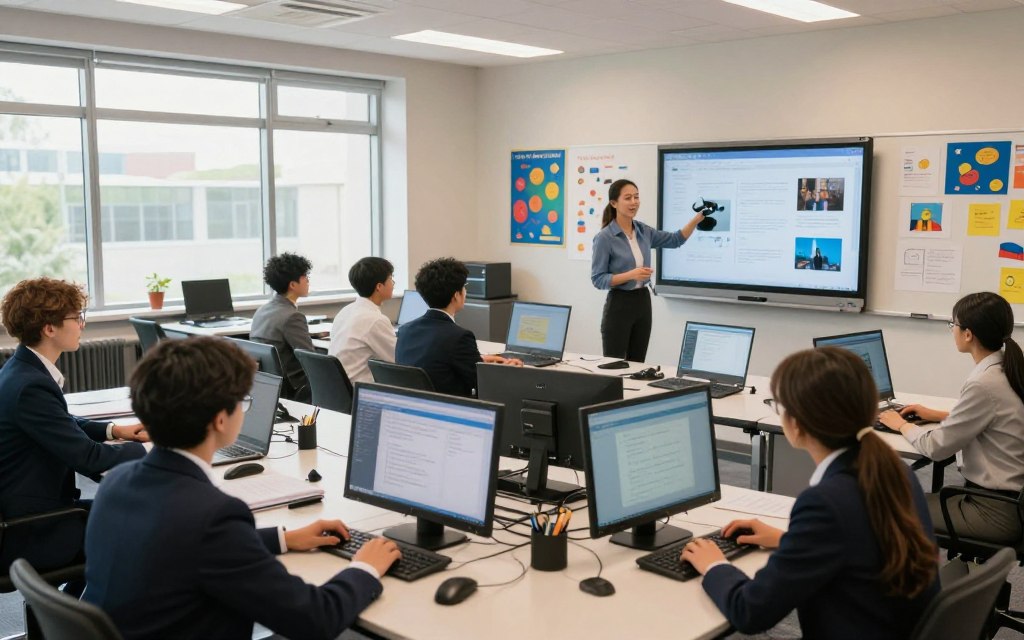
As our world becomes more digital, people ask, should schools use technology in the classroom? Educational technology, such as learning management systems, interactive displays, and adaptive learning platforms, can increase engagement and personalize learning. When schools connect these tools to clear goals, students gain better access to materials and prepare for a tech-driven future.
Still, technology in education brings challenges. Too much screen time, distractions, privacy risks, and unequal resource access can slow progress. System costs and the need for strong teacher training create further barriers.
This article gives a balanced review of educational technology in the U.S. education system. We examine its history, benefits, drawbacks, and equity issues. We study student outcomes and blended learning, asking how technology can be used thoughtfully and fairly, not simply its presence.
Key Takeaways
- Digital tools can enhance student engagement and access to resources.
- Challenges include screen time, distractions, and privacy concerns.
- Implementation costs and teacher training are significant factors.
- Equity issues must be addressed to ensure all students benefit.
- Focus should be on the effective use of technology rather than its mere presence.
The Evolution of Technology in American Classrooms
Education has changed greatly over the decades, especially as technology entered American classrooms. This change includes new tools and major shifts in teaching and learning methods. The history of educational technology shows how innovations have shaped classroom experiences.
From Chalkboards to Smartboards: A Brief History
Early teachers used chalkboards to share information. These simple boards supported direct interaction between teachers and students. Later, overhead projectors and filmstrips offered new ways to present lessons.
Educational television brought lessons into homes and classrooms. Desktop computers arrived in the 1980s, helping create internet-connected classrooms. Today, interactive whiteboards and tablets support a more active learning environment.
Modern classroom technology trends focus on student engagement. Today’s systems support teacher presentations and help students create, collaborate, and assess learning. This change supports a more interactive, student-centered approach.
The Current State of EdTech Adoption in the United States
Today, EdTech adoption in the United States is diverse and changing quickly. Many districts use one-to-one device programs, giving each student a personal device. Learning management systems and digital assessment tools now support daily instruction.
Video lessons and online libraries offer extra resources and enrich learning. However, EdTech adoption differs across districts, grade levels, and subjects. Local policies and infrastructure also shape classroom technology use.
Related Posts:
- What Is Infrastructure and Technology The Foundation…

- What Is a Health Technology Innovations in Medical Care

- What Is a Product in Technology From Software to Hardware

- How Science and Technology Depend on Each Other A…

- How Technology Has Affected the Medical Field…

- What Is Deception Technology Cyber Security Defense…

Remote and hybrid learning further accelerated technology investments and increased teacher familiarity with digital tools. Yet widespread adoption does not guarantee better learning outcomes. Successful use requires thoughtful design, reliable connectivity, accessibility, and educator judgment.
Why Schools Should Use Technology in the Classroom
The benefits of technology in the classroom include stronger engagement and new ways to support learning. Digital tools make lessons more interactive and appealing. With thoughtful use, technology encourages collaboration and active participation.
Boosting Student Engagement and Participation
Student engagement technology can boost student engagement. Interactive simulations, multimedia presentations, and educational games capture attention and offer varied ways to learn. Polls and quizzes make lessons fun, dynamic, and welcoming, even for hesitant students.
Enabling Personalized and Self-Paced Learning
Technology also enables personalized learning through adaptive platforms and digital assignments. Students can learn at their own pace, receive immediate feedback, and use practice suited to their needs. Translation support, text-to-speech, and other personalized learning tools improve access for all students, but technology should not replace valuable teacher relationships.
Expanding Access to Information and Resources
Technology expands access to information through digital learning resources. Online databases, open educational resources, and digital collections offer materials that traditional textbooks may not include. Students can explore primary documents, expert interviews, and current information to understand subjects more deeply.
Students must learn to check these resources for credibility, avoid misinformation, and cite sources responsibly.
| Benefit | Description | Examples |
|---|---|---|
| Boosting Engagement | Increases student interest and participation in lessons. | Interactive games, multimedia content. |
| Personalized Learning | Allows students to learn at their own pace with tailored feedback. | Adaptive learning platforms, digital assignments. |
| Access to Resources | Provides a wide range of information beyond textbooks. | Online databases, open educational resources. |
Key Benefits of Integrating Technology in Education
Using technology in education brings many benefits that can improve student learning. It can raise academic performance, prepare students with 21st-century learning skills, build digital literacy, and support teamwork.
Developing Critical Digital Literacy Skills
In today’s digital age, digital literacy in schools is essential. It means more than knowing how to use a device. Students must learn to:
- Evaluate online sources for credibility
- Recognize bias and manipulated content
- Protect personal information
- Create digital media responsibly
- Understand copyright laws
- Communicate effectively and ethically
Schools can teach these vital technology skills for students through real-world projects, not separate computer lessons. This approach helps students face real challenges and improves their learning experience.
Fostering Collaboration Through Digital Tools
Collaboration is another key benefit of technology in education. Collaboration tools for students such as shared documents, discussion boards, and project management platforms enable students to work together seamlessly. These tools allow them to:
- Plan and research collaboratively
- Revise and present work as a team
- Engage in video conferencing and digital whiteboarding
Giving groups meaningful roles and assessing individual contributions and group outcomes are vital for effective collaboration. Digital collaboration can also connect classrooms across regions, giving all students flexible communication options. However, schools must set clear expectations for privacy, respectful conduct, and responsible artificial intelligence use.
The Cons of Technology in the Classroom
Technology in the classroom offers benefits, but it also creates challenges for educators. Understanding the disadvantages of technology in education helps schools build a balanced learning environment. Key concerns include screen time in schools, health risks, and classroom distractions that may limit learning.
Increased Screen Time and Health Implications
One major concern with technology use in schools is the time students spend looking at screens. Long screen use may cause health problems, including:
- Eye strain and discomfort
- Headaches
- Sedentary behavior, which can contribute to obesity
- Poor posture
Excessive screen time can reduce breaks and limit physical, hands-on, and face-to-face activities. Educators can reduce these risks with age-appropriate limits, movement breaks, and printed materials when suitable. Outdoor or experiential learning can also help balance screen time in schools.
Distraction and Reduced Attention Spans
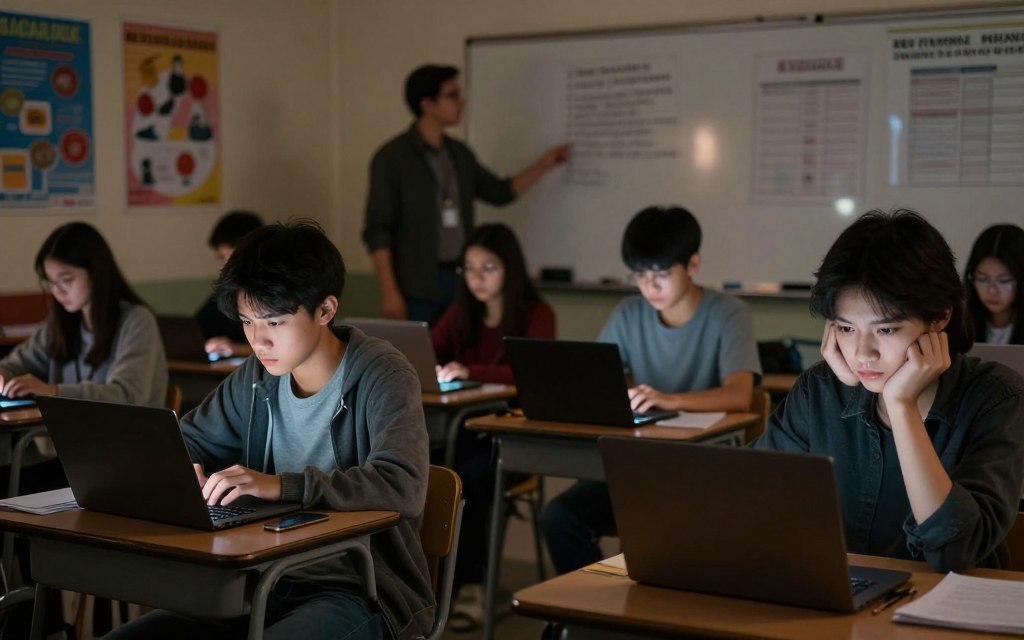
Another concern is classroom distractions. Games, social media, and entertainment sites can make it hard for students to stay focused. Technology may also shorten student attention spans and encourage multitasking, which can lead to:
- Decreased comprehension
- Difficulty sustaining attention
Not every digital activity causes distraction. Teachers can build focus with clear routines, limited device settings, and tasks that require careful effort. Monitoring engagement and adding technology-free lesson segments can improve focus.
In conclusion, technology can enrich education, but educators must address its drawbacks. Thoughtful strategies can create a stronger learning environment and reduce the disadvantages of technology in education.
Equity and the Digital Divide in U.S. Schools
Today, the digital divide in education shapes how students learn. Technology access for students includes more than owning a device. Other barriers can prevent students from succeeding and weaken an equitable learning environment.
Socioeconomic Barriers to Technology Access
Many students face socioeconomic barriers to EdTech beyond device ownership. They may lack reliable broadband, which they need to complete assignments. Housing instability, language barriers, and limited family support create additional challenges.
Homework that assumes steady internet access can unfairly harm students without stable connections. They may lack quiet study spaces and technical help for completing assignments. Limited access can lower academic performance and increase frustration.
Rural Versus Urban Technology Gaps
Technology access differs sharply between rural and urban schools. Rural school technology faces limited broadband infrastructure and smaller technology budgets. These limits make hiring specialized technical staff harder and can weaken classroom technology use.
Urban schools may face overcrowded networks and aging buildings, which complicate technology implementation. Urban areas may have more resources, but school differences can remain significant. These gaps create uneven access to educational technology.
District-level planning is essential for addressing these challenges. Device lending programs, offline access, and community partnerships can help bridge the gap. Multilingual support and technical assistance give all students resources to thrive.
Equitable implementation requires reliable access during and beyond the school day. Distributing devices alone is not enough; schools must help every student succeed.
Implementation Challenges for Schools
Schools face EdTech implementation challenges when they bring technology into classrooms. These challenges can reduce the impact of educational technology. Understanding them supports successful integration.
Budget Limitations and Funding Strategies
One major obstacle is budget limitations, especially when school technology funding is tight. Buying devices covers only part of educational technology’s total cost. Districts must also budget for:
- Broadband and network upgrades
- Software licenses
- Accessibility tools
- Cybersecurity measures
- Device management and repairs
- Replacement cycles
- Technical support
- Data storage
- Professional learning opportunities
Schools can address these costs through responsible funding approaches. These include:
- Phased rollouts of technology
- Total-cost-of-ownership reviews
- Grant applications
- Utilizing state and federal programs
- Building community partnerships
Schools should compare free and paid platforms carefully. They should not choose products only because of popularity or marketing hype.
Teacher Training and Professional Development
Another critical need is teacher technology training and professional development for educators. Teachers need practical, ongoing support instead of one introductory workshop. Effective training should show how a tool:
- Advances curriculum standards
- Enhances assessment methods
- Improves classroom management
- Supports accessibility
- Safeguards student privacy
Training should include coaching, peer collaboration, model lessons, and planning time. Teachers should help choose products and develop policies. This approach solves known teaching problems without adding needless complexity.
Real-World Impact on Student Outcomes
The link between technology and student achievement is complex, so schools need several ways to measure its effects. More device use does not always improve academic performance.
Schools should review course grades, assessment results, attendance rates, and assignment completion when measuring technology’s impact. They should also assess reading growth, writing quality, student engagement, graduation rates, and student confidence. Results may differ by tool, subject, student age, and implementation quality.
Schools must separate correlation from causation when they study these outcomes. Does technology improve learning, or does it only change how teachers deliver content? This difference guides informed classroom technology decisions.
Academic Performance and Test Score Trends
Many studies examine academic performance and EdTech. Districts with successful technology programs often report higher test scores. However, results vary widely by context and intervention.
In some cases, technology supports struggling students through personalized learning experiences. Programs offering targeted tutoring through digital platforms have produced notable gains in student achievement. These gains are especially clear among students needing additional support.
Case Studies from Successful U.S. Districts
Several U.S. school districts have used technology with clear goals and measurable results. One district launched digital tutoring to improve math skills among middle school students. Trained teachers monitored progress and adapted instruction to student needs.
This approach increased student engagement and produced significant test score gains. Another district used translation tools and tailored resources to support multilingual learners. These U.S. school district case studies show successful school technology programs target specific challenges and test effectiveness.
Striking the Right Balance Between Tech and Tradition
Technology and traditional teaching can create a dynamic learning environment. Balanced classroom instruction supports effective learning.
Blended learning strategies combine face-to-face instruction with digital resources. This planned mix boosts engagement and supports diverse learning needs.
Effective Blended Learning Strategies
To implement successful blended learning, educators can:
- Rotate between individual digital work and small-group collaboration.
- Incorporate teacher-led instruction alongside hands-on activities.
- Utilize creative projects that encourage movement and engagement.
For example, a simulation might explore complex systems, while a live discussion builds ethical reasoning and relationships. This approach matches technology choices with specific learning goals.
Guidelines for Thoughtful Technology Integration
For effective technology integration, educators should follow a practical decision framework:
- Define the instructional goal.
- Identify the student need.
- Select the simplest effective tool.
- Confirm accessibility and privacy protections.
- Prepare students for responsible use.
- Monitor learning and revise the approach based on evidence.
Educators should limit notifications and non-instructional browsing. They should also provide regular screen-free opportunities.
Clear family communication and shared classroom expectations can improve learning. Effective integration means better outcomes, not simply more devices or apps.
Conclusion
As education changes, should schools embrace technology in the classroom? Schools should integrate technology when it enhances learning, promotes equitable access, and strengthens instructional methods. The future of technology in education may boost engagement, personalize learning, and expand access to vital resources.
Digital tools can develop essential digital literacy skills, foster student collaboration, and prepare students for technology-rich workplaces. Schools must address significant concerns, including increased screen time, potential distractions, and privacy risks. Responsible classroom technology must balance these benefits and concerns.
To achieve sustainable EdTech adoption, school leaders should evaluate technology based on educational value, total cost, accessibility, and student well-being. Teacher input is crucial because technology should support, not replace, meaningful interactions and hands-on experiences.
Ultimately, strong schools will thoughtfully blend technology with traditional methods. This approach can create inclusive, rigorous, and human-centered learning environments. For further insights on integrating technology effectively, visit this resource.